For MLS · MLT · Biomedical Science · Phlebotomy students
The Lab Atlas · 80 visual maps

Clinical lab science, one topic per page.

80 visual maps across the 10 areas of the program: the rule, the picture and the exam trap on a single page. What takes an afternoon in the textbook, you get in one map.

Order of drawCell morphologyParasitesUrine sedimentCoagulationQC & Westgard
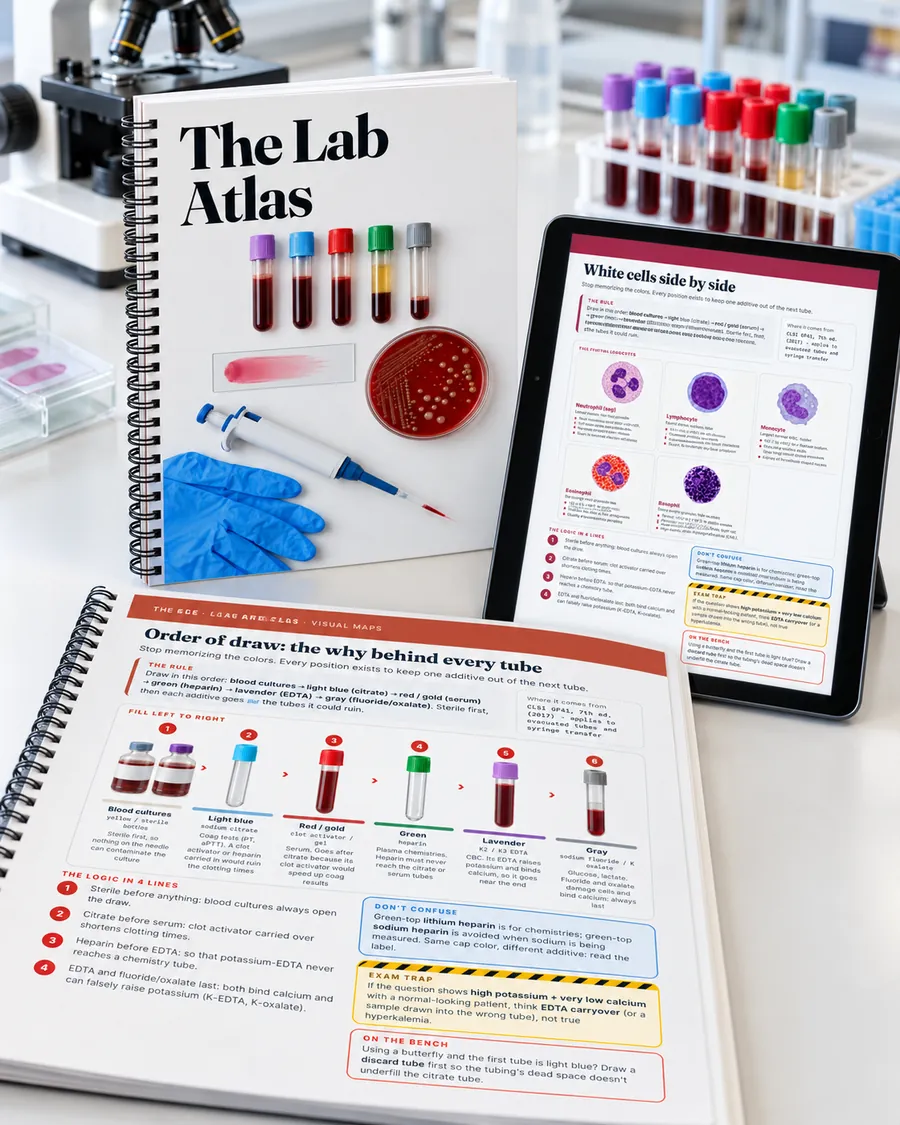
The Lab Atlas printed and on a tablet, on a lab bench
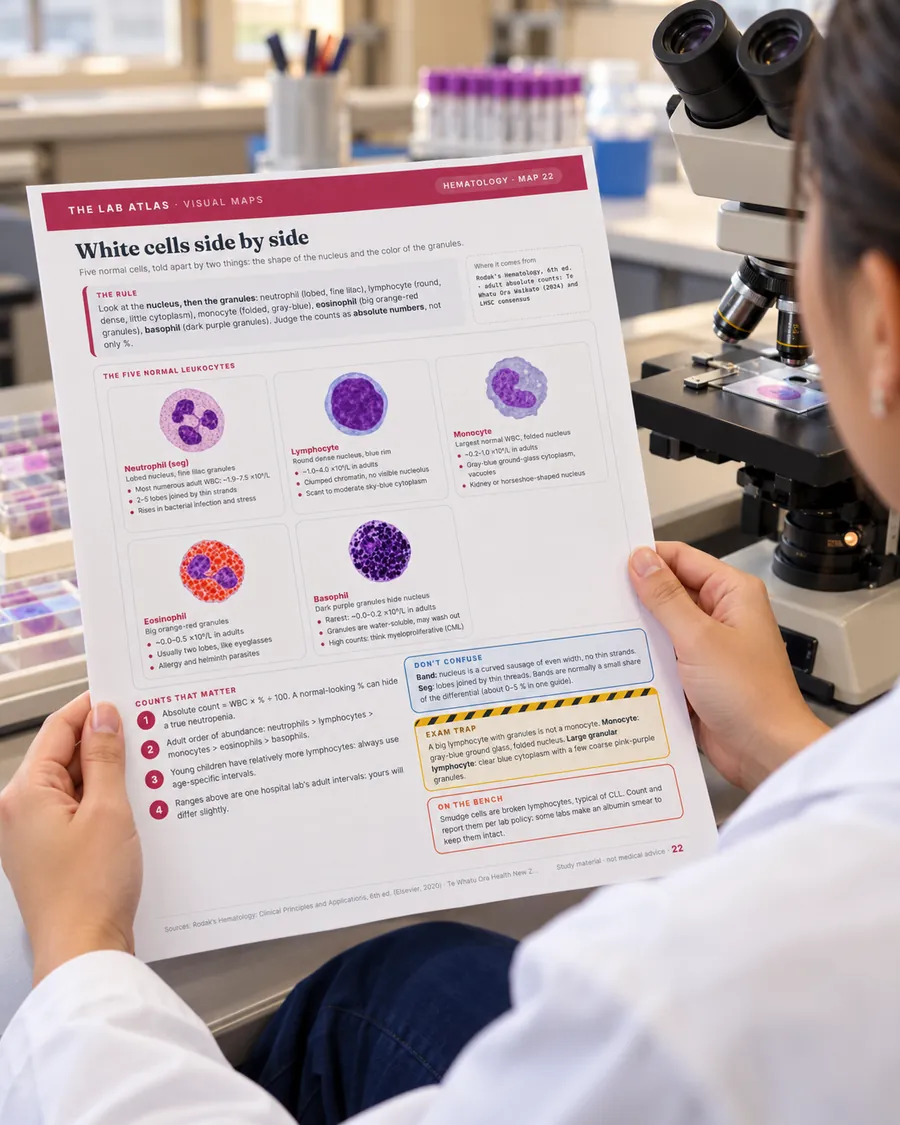
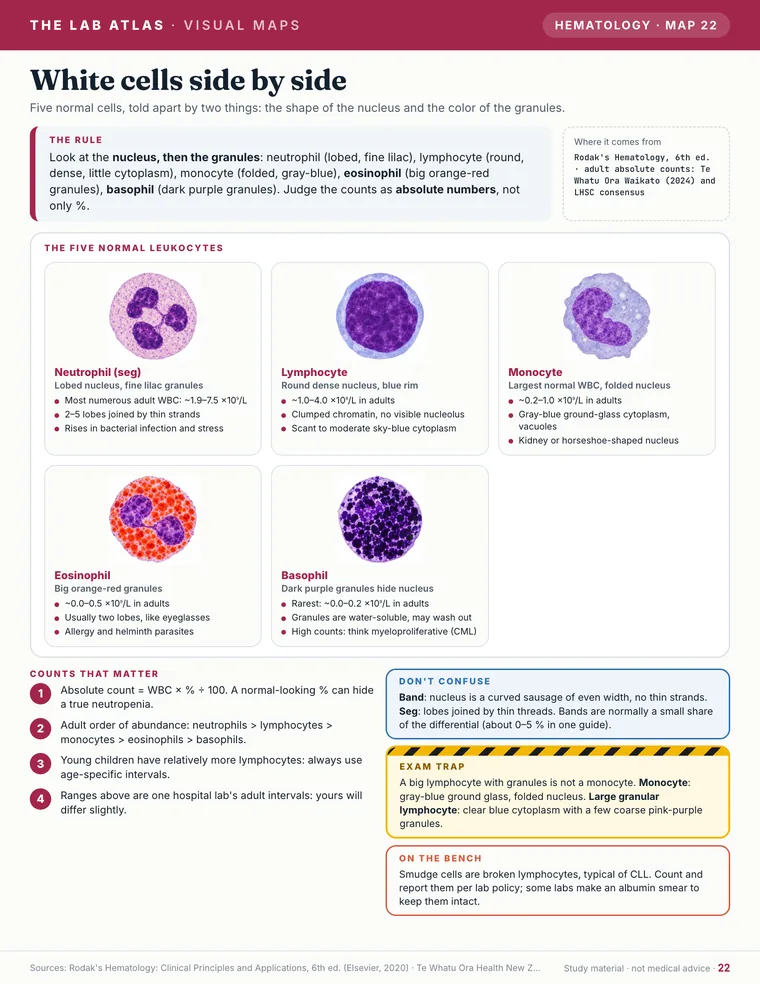
A student holding the white cells map next to a microscope
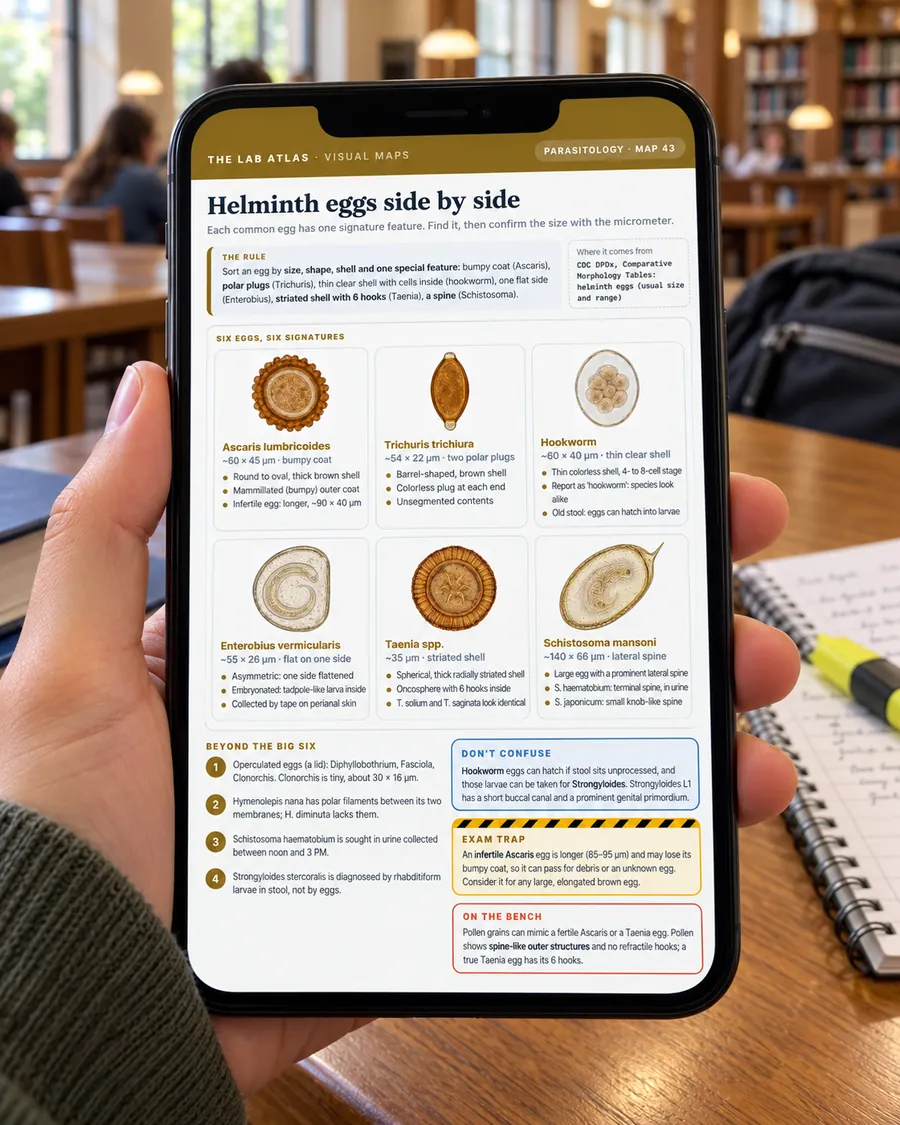
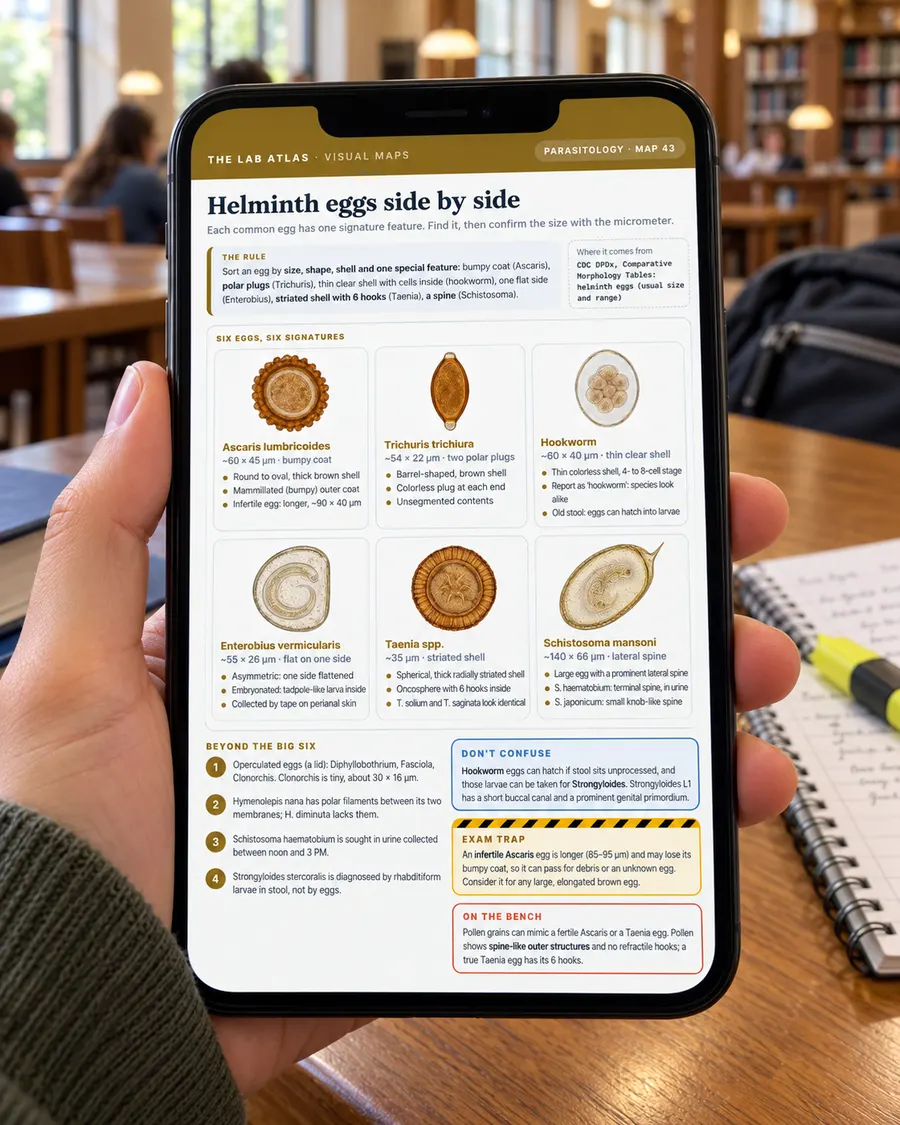
The helminth eggs map on a phone in a library
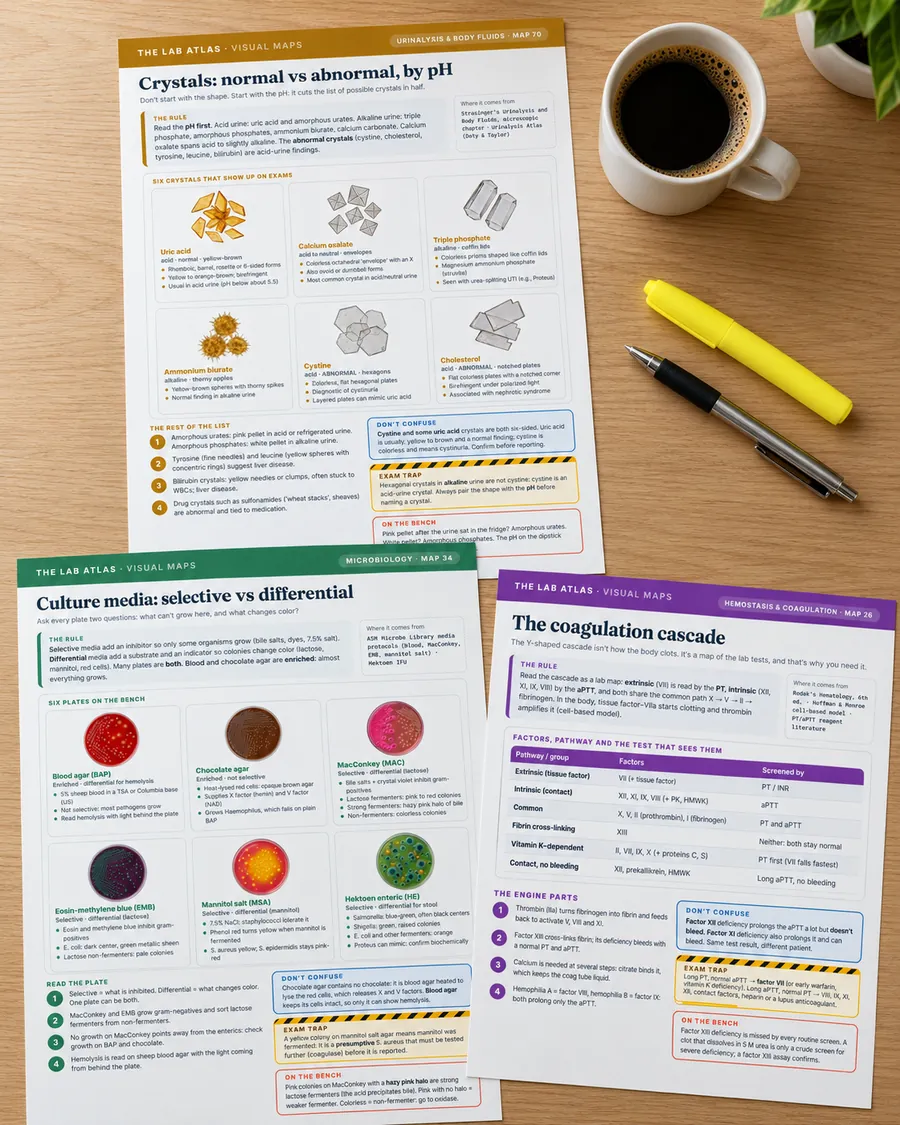
Printed maps of crystals, culture media and the coagulation cascade
Bonus 1: Order of Draw Pocket Cards
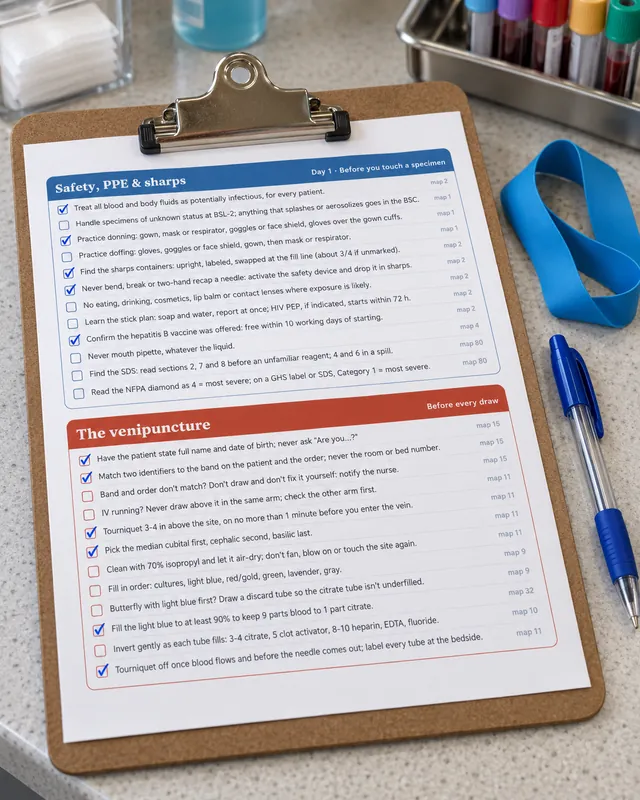
Bonus 4: The Clinical Rotation Checklist
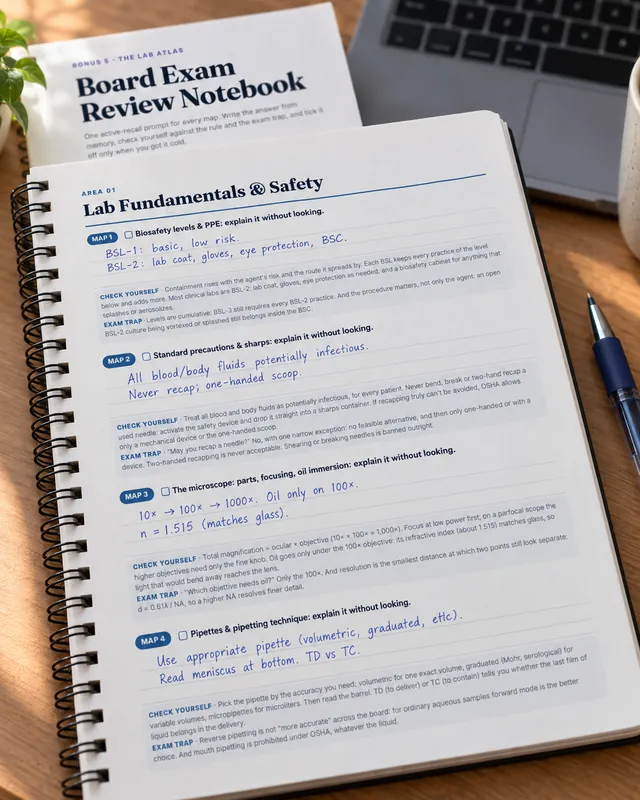
Bonus 5: Board Exam Review Notebook
GET THE LAB ATLAS — $2780 maps + 5 bonuses · phone or print
One payment30-day guaranteePDF to your email
Sound familiar?

It's not that lab science is impossible. It's that it's everywhere.

Five PDFs and three textbooks

The order of draw is in one file, the cells in another, the crystals in a book you left at home.

Walls of text

You open a 400-page chapter, read for an hour and still can't picture what a reactive lymphocyte looks like.

Memorizing without the why

You memorize the tube colors, the exam asks why EDTA goes last, and it's gone.

Inside every map

Same order on every page. Your brain learns where to look.

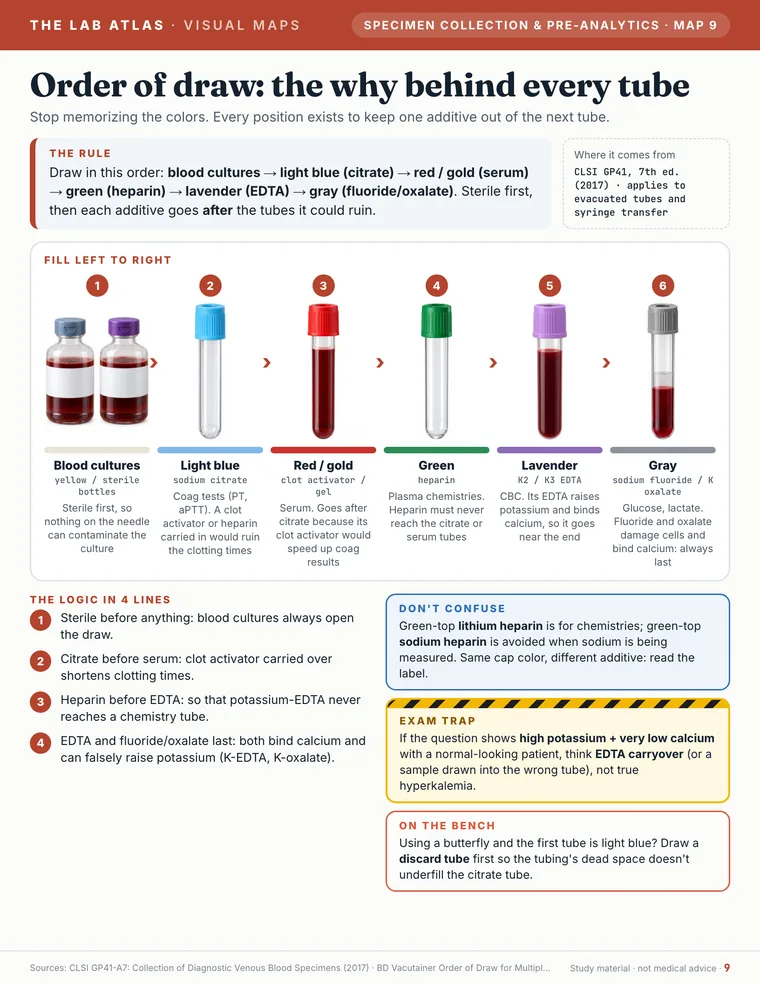
Map 9: Order of draw, the why behind every tube
  1. The ruleThe one answer the page is built around, with where it comes from.
  2. The visualReal-looking tubes, cells, eggs, crystals, flowcharts and tables: the part you remember.
  3. The logic in a few linesSo you understand it instead of memorizing it.
  4. Don't confuseThe look-alike that trips students up.
  5. Exam trapHow the topic gets twisted into a tricky question.
  6. On the benchWhat it looks like in your rotation, not in the book.
The full library

80 maps. 10 areas. The whole program.

Tap an area to see its 8 maps.

01 · Lab Fundamentals & Safety
  • 1 · Biosafety levels & PPE
  • 2 · Standard precautions & sharps
  • 3 · The microscope: parts, focusing, oil immersion
  • 4 · Pipettes & pipetting technique
  • 5 · Centrifuge: RPM vs RCF & balancing
  • 6 · Units: conventional vs SI conversions
  • 7 · Reagent water & glassware grades
  • 8 · Dilutions & serial dilutions
02 · Specimen Collection & Pre-analytics
  • 9 · Order of draw (the why behind every tube)
  • 10 · Tube additives & inversions
  • 11 · Venipuncture: site selection & steps
  • 12 · Capillary puncture: sites & order
  • 13 · Hemolysis, lipemia, icterus: what they falsely change
  • 14 · Specimen rejection criteria
  • 15 · Patient ID & labeling
  • 16 · Transport & storage: temperature, light, time
03 · Hematology
  • 17 · Hematopoiesis tree
  • 18 · The CBC: every parameter in one page
  • 19 · RBC indices & anemia classification
  • 20 · RBC shapes (poikilocytes)
  • 21 · RBC inclusions
  • 22 · White cells side by side
  • 23 · Reactive lymphocyte vs blast
  • 24 · The blood smear: making it & where to read
04 · Hemostasis & Coagulation
  • 25 · Primary hemostasis: the platelet plug
  • 26 · The coagulation cascade
  • 27 · PT/INR vs aPTT: what each one tests
  • 28 · Mixing study: factor deficiency vs inhibitor
  • 29 · Fibrinogen, D-dimer & FDPs
  • 30 · Platelet disorders map
  • 31 · Monitoring anticoagulants
  • 32 · The citrate tube: fill ratio & high hematocrit
05 · Microbiology
  • 33 · Gram stain: steps & reading
  • 34 · Culture media: selective vs differential
  • 35 · Gram-positive cocci ID flowchart
  • 36 · Gram-negative rods ID flowchart
  • 37 · Hemolysis on blood agar
  • 38 · Key biochemical tests
  • 39 · Susceptibility testing: disk diffusion & MIC
  • 40 · Blood & urine cultures: collection that doesn't contaminate
06 · Parasitology
  • 41 · Parasite classification overview
  • 42 · Intestinal protozoa: trophozoites & cysts
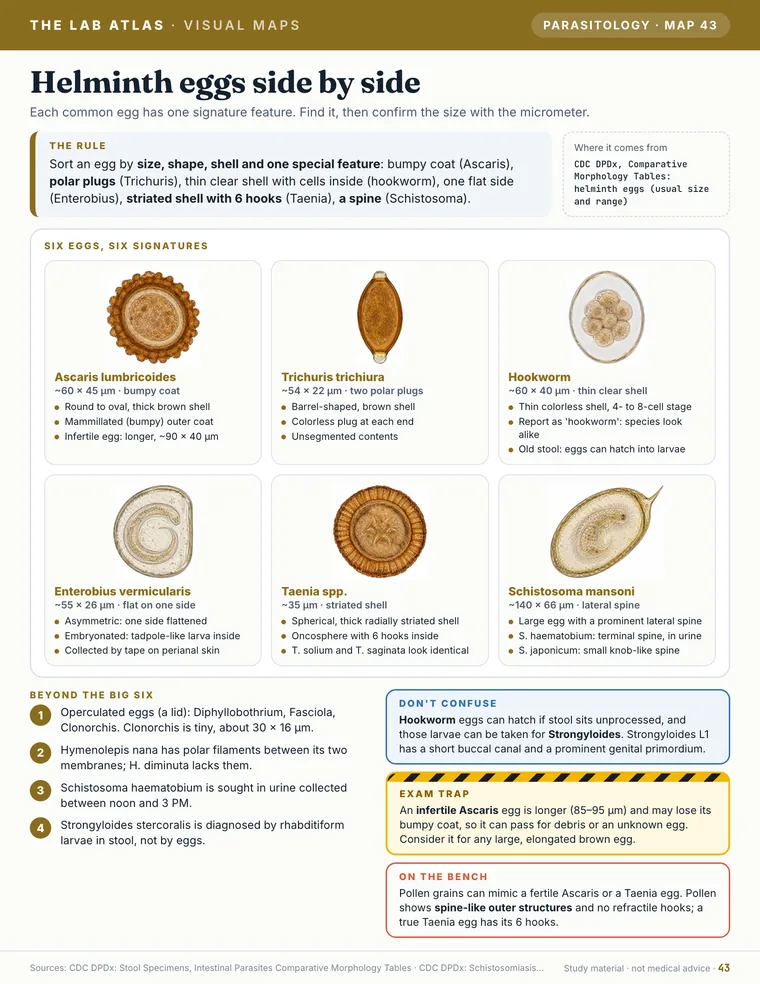
  • 43 · Helminth eggs side by side
  • 44 · Malaria species on the smear
  • 45 · The O&P exam step by step
  • 46 · Blood & tissue parasites
  • 47 · Life cycles: the templates
  • 48 · Artifacts that mimic parasites
07 · Clinical Chemistry
  • 49 · Liver panel: ALT vs AST, ALP, GGT, bilirubin
  • 50 · Kidney function: BUN, creatinine, eGFR
  • 51 · Electrolytes & the anion gap
  • 52 · Glucose & HbA1c
  • 53 · Lipid panel & calculated LDL
  • 54 · Cardiac markers
  • 55 · Acid-base: reading an ABG
  • 56 · Spectrophotometry & Beer's law
08 · Immunology, Serology & Blood Bank
  • 57 · Antibody classes
  • 58 · Agglutination vs precipitation
  • 59 · ELISA formats
  • 60 · Hepatitis B serology panel
  • 61 · HIV testing algorithm
  • 62 · Complement pathways
  • 63 · Hypersensitivity types I-IV
  • 64 · ABO/Rh typing & crossmatch
09 · Urinalysis & Body Fluids
  • 65 · Urine specimen types
  • 66 · Physical exam: color, clarity, specific gravity
  • 67 · The dipstick: every pad & its false results
  • 68 · Urine sediment: cells
  • 69 · Casts
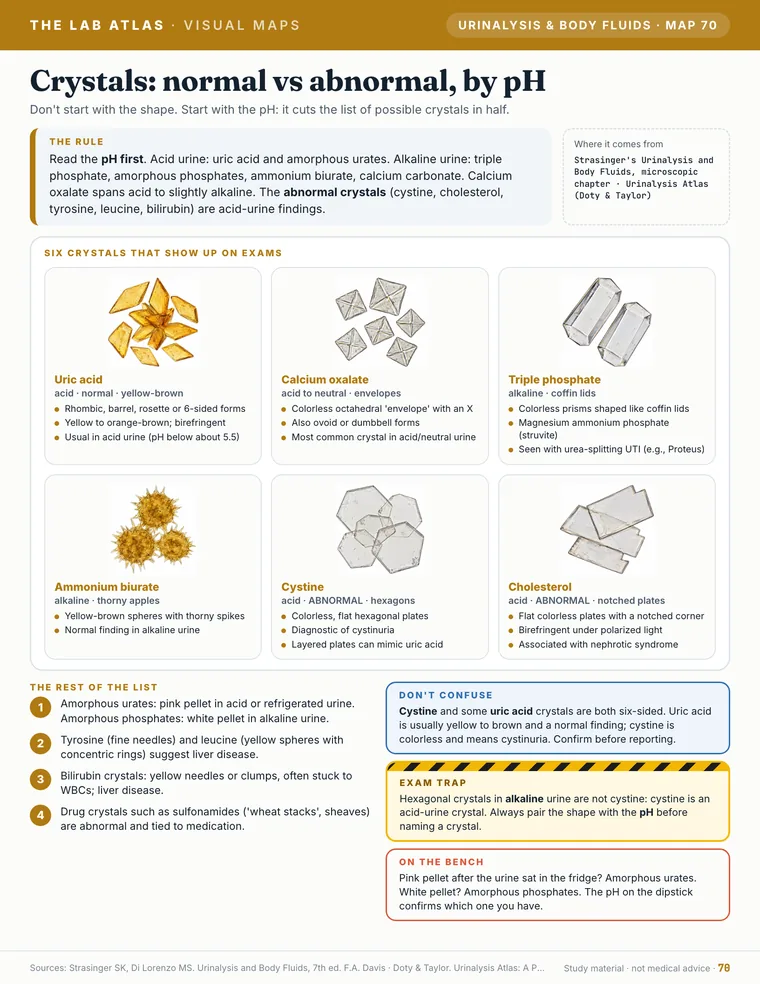
  • 70 · Crystals: normal vs abnormal, by pH
  • 71 · CSF analysis
  • 72 · Serous & synovial fluids: transudate vs exudate
10 · Quality Control & Lab Operations
  • 73 · Levey-Jennings charts
  • 74 · Westgard rules
  • 75 · Accuracy vs precision & CV
  • 76 · Sensitivity, specificity, PPV, NPV
  • 77 · Reference intervals & critical values
  • 78 · Pre-, analytical & post-analytical errors
  • 79 · Method validation basics
  • 80 · Chemical safety: SDS & NFPA diamond
Everything you get

The atlas, plus 5 bonuses built on the same maps.

The Lab Atlas
THE CORE

The Lab Atlas · 80 visual maps

Letter-size PDF, 93 pages: cover, how to use it, contents, a divider per area and the 80 maps.

  • Fundamentals & safety · Specimen collection · Hematology · Coagulation · Microbiology
  • Parasitology · Clinical chemistry · Immunology & blood bank · Urinalysis · QC
  • Conventional and SI units where they matter
Order of Draw Pocket Cards
BONUS 1

Order of Draw Pocket Cards

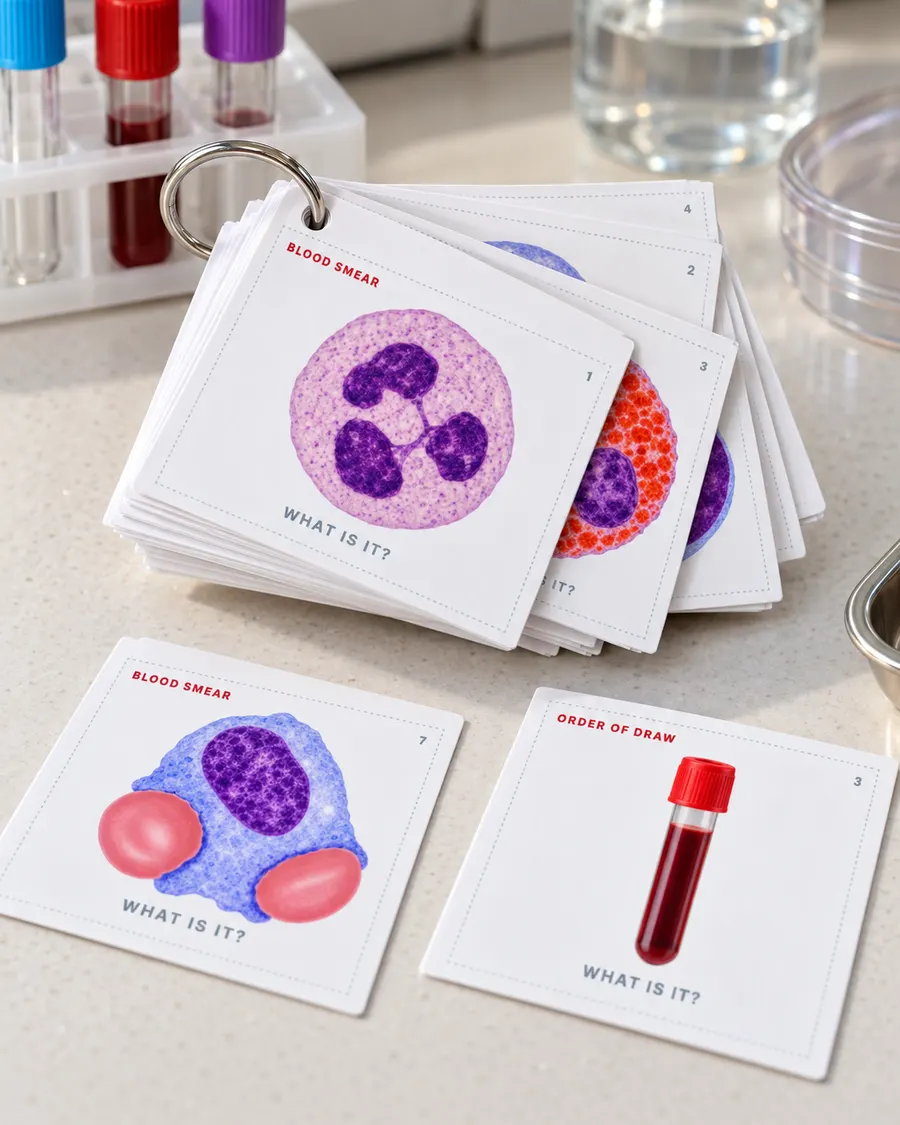
One card per tube: position, additive, inversions and what goes wrong if you skip the mixing. Print, cut, keep them in your scrubs pocket.

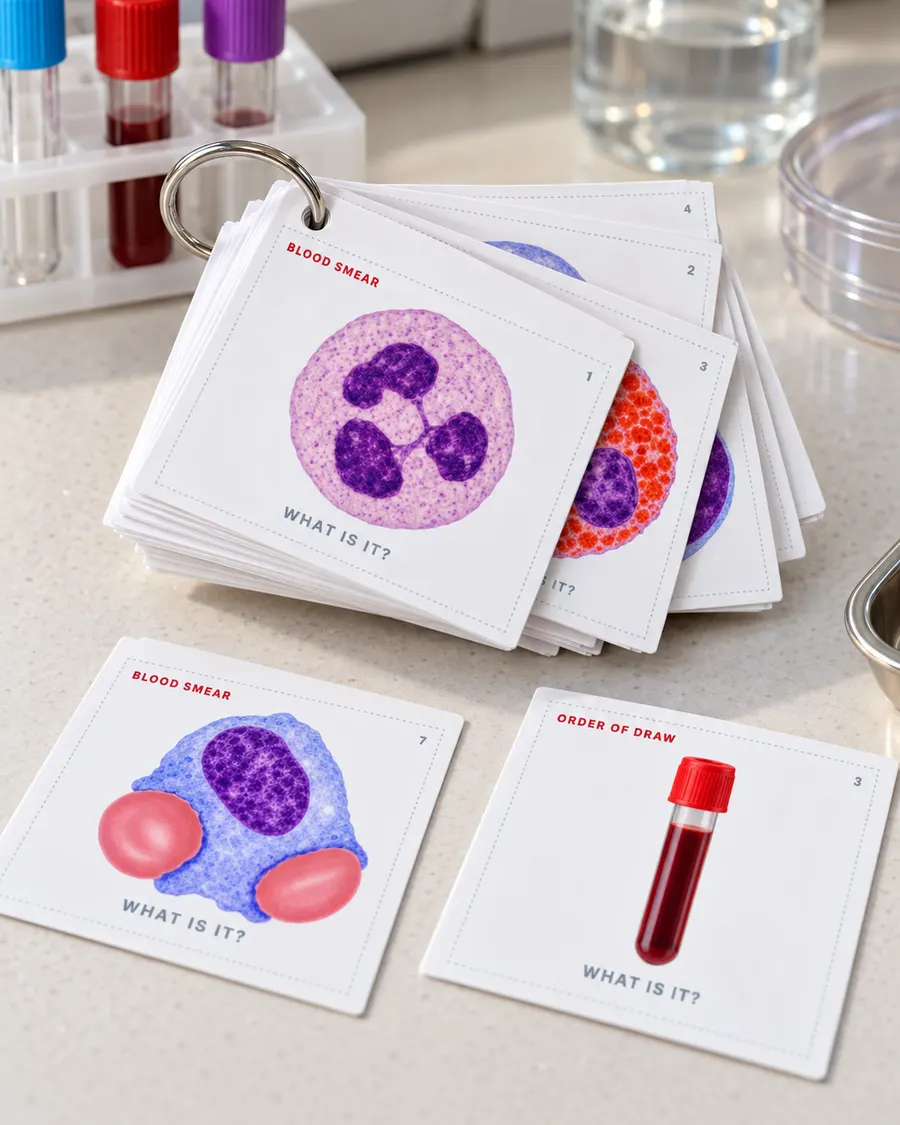
Blood Smear ID Cards
BONUS 2

Blood Smear ID Cards

27 cards: white cells, blasts, red cell shapes and inclusions. Picture on the front, the features on the back.

Parasite and Urine Sediment ID Cards
BONUS 3

Parasite & Urine Sediment ID Cards

Eggs, cysts, trophozoites, malaria stages, cells, casts and crystals: the things you must recognize on sight.

The Clinical Rotation Checklist
BONUS 4

The Clinical Rotation Checklist

94 checks in the order you'll live them: day one, every draw, every specimen, every shift. Each one points to its map.

Board Exam Review Notebook
BONUS 5

Board Exam Review Notebook

A 4-week plan and one active-recall prompt per map: answer from memory, then check yourself against the rule and the trap.

Who it's for

Made for the people who run the lab.

MLS / CLS studentsEvery area of the program, ready to review before class and exams.
MLT studentsThe bench essentials, organized so you can find them fast.
Biomedical scienceThe visual companion to your lectures and placement.
Phlebotomy studentsOrder of draw, additives, rejection criteria and specimen handling.
One payment, yours to keep

Get The Lab Atlas

$27 USD · one payment
  • The Lab Atlas · 80 visual maps (93-page PDF)
  • Bonus 1 · Order of Draw Pocket Cards
  • Bonus 2 · Blood Smear ID Cards
  • Bonus 3 · Parasite & Urine Sediment ID Cards
  • Bonus 4 · The Clinical Rotation Checklist
  • Bonus 5 · Board Exam Review Notebook
  • On your phone, tablet or computer, or printed
GET THE LAB ATLASSecure checkout · PDFs sent to your email

Optional add-on at checkout

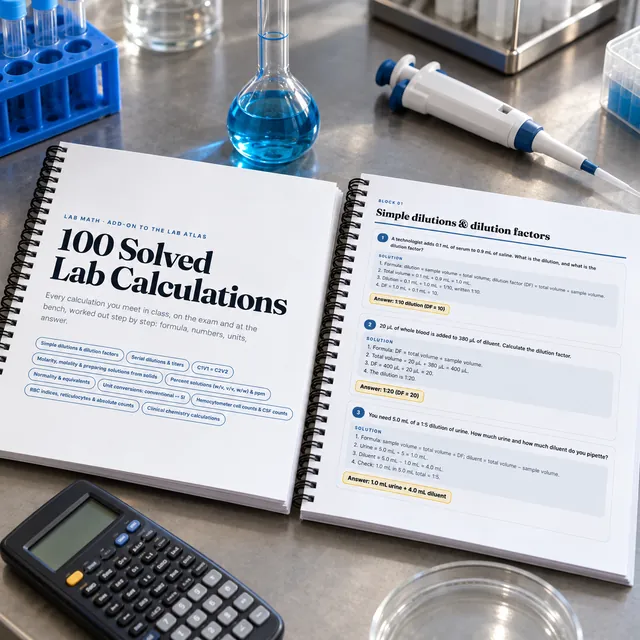
Lab Math: 100 Solved Calculations
Lab Math: 100 Solved Calculations · $19Dilutions, molarity, unit conversions, cell counts, indices and chemistry calcs, solved step by step.
30-day guarantee. If the atlas isn't for you, write to us within 30 days of your purchase and you get your money back. No questions asked.

Questions

What exactly do I receive?

PDFs sent to the email you use at checkout: the 93-page atlas with the 80 maps, and the 5 bonuses. Letter size, ready to read on screen or print.

Is it a course?

No. There are no videos or lessons to sit through. It's a visual atlas: open it, find the topic, check it in seconds.

Does it replace my textbook or my program?

No. It organizes what your program teaches into one page per topic, so you review faster and remember more. Always follow your instructors and your lab's procedures.

Are the reference values the same as my lab's?

Reference intervals vary by lab, method and population. The maps give typical adult ranges and say so; your own lab's values always win.

Will it work outside the US?

Yes. The science is the same, and where units matter the maps show conventional and SI units side by side.

Can I print it?

Yes, as many copies as you want for your own study. The ID cards are designed to print double-sided and cut.

What if it's not for me?

You have 30 days to ask for a refund. Write to us and we'll take care of it.
Stop hunting through five PDFs.

80 maps, 5 bonuses, one payment.

GET THE LAB ATLAS — $2730-day guarantee
$27one payment
GET THE ATLAS